
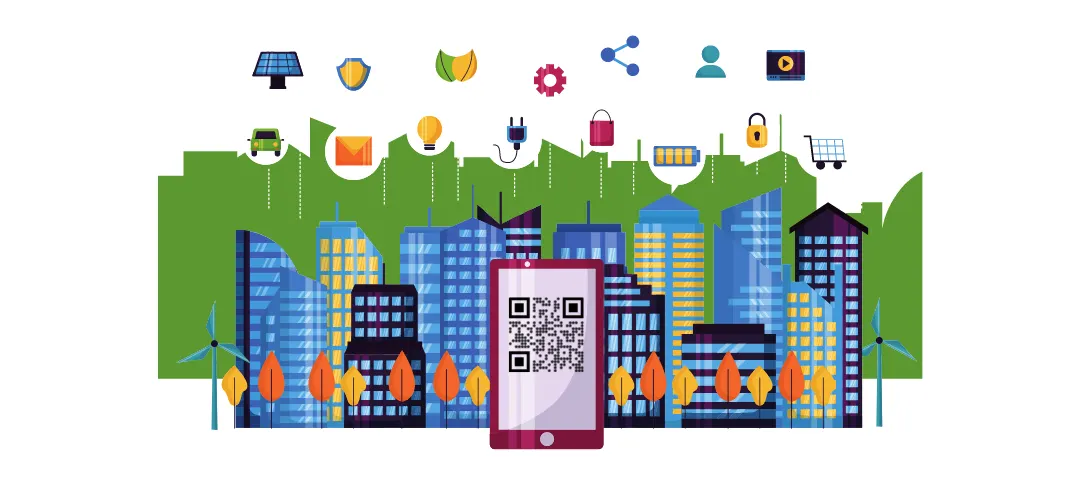
Smart cities use QR codes to connect physical places with digital services. A code on a bus stop can open the live timetable, a code on a bin can show collection days, and a code in a park can log visitors into public Wi-Fi. Residents only need a phone camera, and the city can update what the code opens without replacing every sign.
What is a smart city?

According to TWI-Global, a smart city uses information and communication technology (ICT) to improve operational efficiency, share information with the public and provide better government services and citizen welfare.
In practice that covers fast internet access, sustainable energy, intelligent transport such as electric vehicles, modern health care, waste management systems, energy-efficient buildings and government services that are easy to reach and give feedback to. Many smart city programmes also fund activities that bring residents together.
Why QR codes suit smart cities
A QR code is a small square barcode that stores data in two dimensions, so it holds far more than a standard barcode: up to several thousand characters. An engineer at Denso Wave, then part of the Toyota group, developed it in the mid-1990s because factories needed codes that could carry more information.
Using one needs no special skills. Current iPhones and most Android phones read QR codes with the built-in camera app.
For a city, the useful part is the link inside the code. A dynamic QR code contains a short link, so the destination can be changed after the code is printed, and scan statistics show where and when people use it.
How cities can use QR codes
Transportation
Codes at bus stops, train stations, airports and piers can open live departure times, route maps and ticket shops. Passengers get current information without waiting at a counter.
Waste management
A code on a public bin or a recycling point can show collection days and sorting rules, or open a form to report a full or damaged bin. Codes on individual bins can also help crews record collections.
Emergency services
QR codes can hold emergency phone numbers, so people can call for help with one tap instead of looking the number up.
Energy management
Codes on meters and in public buildings can link to consumption dashboards or maintenance records. Staff scan the code to reach the right data for that device.
Public Wi-Fi
A Wi-Fi QR code in a library, square or station lets people join the public network without typing a password, which makes it easier to look up information, follow an online class or join a video call on the move.
Best practices for smart city QR codes
- Plan first. Decide what each code is for, whether it should be static or dynamic, where it will go, and who maintains it and checks its statistics.
- One code, one purpose. A code that does several things confuses people.
- Create and design the code. A generator such as qr-cloud.com offers 17 QR code types, including URL, phone, Wi-Fi and location, and lets you set colours, add a logo and choose frames. Keep the code dark on a light background.
- Add a call to action. A short line such as "Scan for live departures" or "Scan to download" tells people what they will get.
- Test before you install. Scan each code with several phones, in daylight and at night, at the distance people will actually stand.
- Place codes where people can reach them. Mount them at a height wheelchair users can scan as well, away from glare.
- Explain how to use them. A short video or printed guide helps staff, officials and residents. Offer the same information in another form, such as a phone number or a typed web address, for people who can't use a code.
Challenges and solutions
Compatibility. Will the codes work with existing systems and with the phones residents use? Work with QR code and IT specialists early and test with common devices.
Cost. Printing codes is cheap. The work lies in the pages behind them and in maintenance. Compare hosted services and open-source tools before committing.
Security. Scammers sometimes stick fake codes over real ones. Use links on a domain that residents recognise as the city's, keep account access restricted, and check public codes regularly. Our guide to QR code scams covers the warning signs.
Adoption. People use codes when they know what to expect. Clear calls to action and simple guides help.
Maintenance. Codes outdoors fade and get damaged, and links go out of date. Schedule regular checks, and use dynamic codes so you can fix a destination without reprinting.
Conclusion
QR codes give smart cities a cheap way to put timetables, contact numbers, Wi-Fi access and service forms on the street. Plan each code's purpose, test it, label it clearly and keep it maintained, and residents will have a reason to scan it.